Walk into any thrift store and you'll pass over most of it. But tucked between the chipped mugs and mismatched glassware sit pieces that sell for hundreds, sometimes thousands…
Walk into any thrift store and you'll pass over most of it. But tucked between the chipped mugs and mismatched glassware sit pieces that sell for hundreds, sometimes thousands, elsewhere.
The trick is knowing what to look for and how to spot the real thing. Here's where the value hides, and how to bring it home for a fraction of its worth.
1. Carnival Glass
Carnival glass has an iridescent shimmer. You'll see it mostly in orange, with turquoise and green showing up less frequently. The glass dates to the first half of the 20th century, so there's plenty of it still floating around.
Why It's Getting Harder to Find
A surge in popularity is thinning out the thrift-store supply, so grab it when you see it. The rare pieces have sold at auction for thousands, and a rare few for hundreds of thousands.
Those are the exceptions, though, not what you'll pull off a shelf.
Tip
Buy the orange over the rarer hues only if the piece itself is beautiful. The color should earn its place, not just its price tag.
2. Solid Brass Candlesticks
Solid brass candlesticks bought new or at an antique store can cost a small fortune. Thrift stores are where that math flips in your favor.
How to Style Them
Candlesticks belong on mantels, dining buffets, and pianos. Group them alongside old books, trays, and art to build a vignette that tells a story. A pair reads better than a single, and they don't need to match perfectly to work together.
Styling tip
Stack a pair atop a few good books, then add a third object beside them to satisfy the rule of three. That small adjustment turns a flat pairing into a composed display.
3. Silver Trays
Silver trays appear constantly on thrift-store shelves, which makes them one of the easiest upgrades to find. They're versatile enough to earn a spot in almost any room.
Where to Put Them
A silver tray adds vintage charm to a powder room, holding hand towels, or sitting on a dresser or vanity to corral perfumes. The polish does the work of making a cheap find look intentional.
Tarnish isn't a dealbreaker. A little polishing restores the shine, and the patina in the crevices only adds to the vintage look.
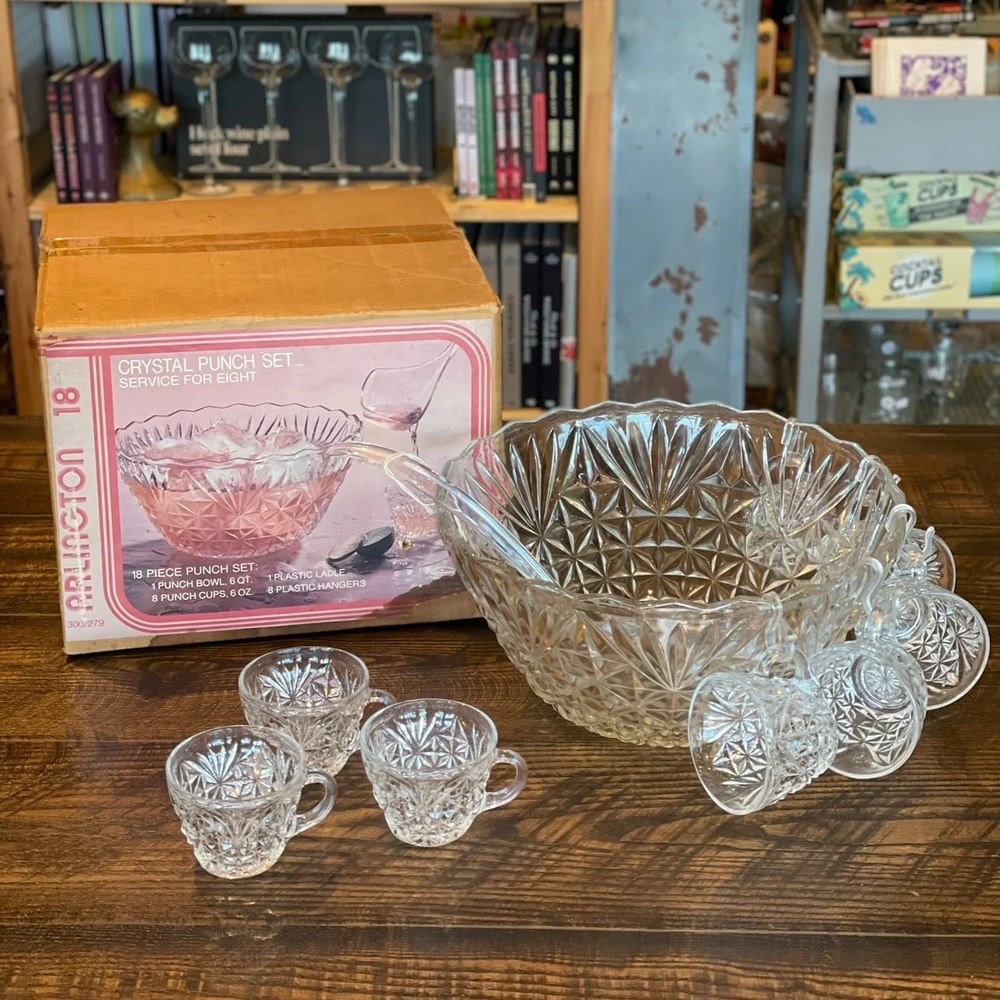
4. Crystal Vases and Punch Bowls
Crystal vases and punch bowls from earlier generations often sit collecting dust in thrift stores. Most shoppers walk past them, which is exactly why they're worth a second look.
How to Use Them
Load a crystal vase with a few white stems, tulips or hydrangeas, and tuck it into unexpected spots: a primary bath, a laundry room, a hallway. Tall, narrow vases are worth collecting, since just a handful of stems fill them out completely.
A few blooms in good crystal reads as considered, not fussy. The shape and weight of real crystal carry a room the way new glass rarely does.
5. Bamboo, Rattan, and Wicker
Bamboo, rattan, and wicker items often date to the midcentury period and add texture a flat room is usually missing. The phrase among dedicated thrifters is "no bamboo left behind."
What to Grab
Keep an eye out for wicker lamps, woven shades, serving trays in bamboo or wicker, small lidded boxes, and plant stands.
A two-tier bamboo bar cart turned up carrying a $1,295 tag on a high-end resale site, which tells you what this material fetches once it leaves the thrift store.
Budget tip
Skip anything too far gone. Natural materials like bamboo and rattan are hard to refurbish once they're damaged, so pass on splitting canes and buy the sound piece instead.
6. Handmade Pottery
Handmade pottery can be worth upwards of a thousand dollars depending on the maker and signature. A handmade ceramic midcentury-modern vase was seen listed for $1,059, so the ceiling here is high.
How to Check Before You Buy
Flip the piece over and look at the bottom. A mark or signature tells you it's handmade and potentially valuable, not mass-produced. That one glance is the difference between a throwaway and a find.
Even without a famous maker, handmade pottery brings warmth and irregularity that factory pieces can't fake. Buy the ones with character.
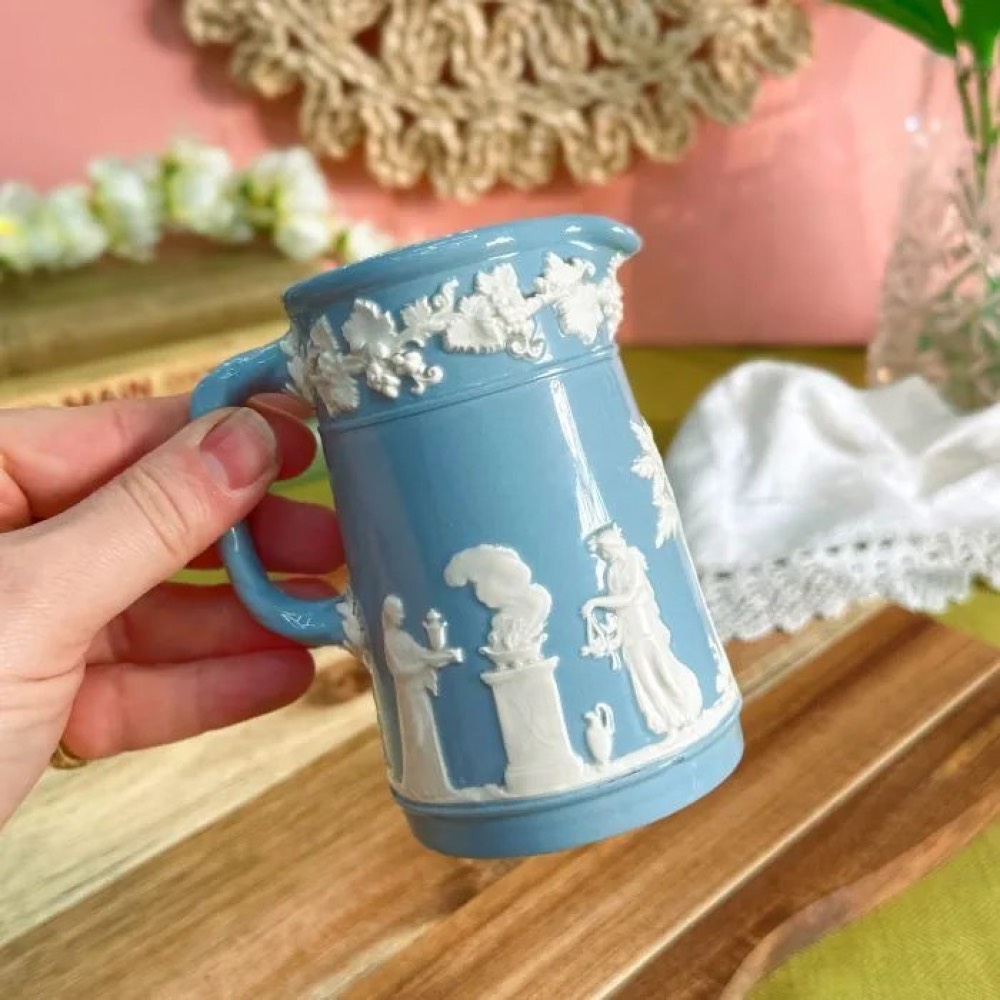
7. Antique Wedgwood
Some antique Wedgwood items fetch thousands of dollars, and the line includes collectibles like Jasperware vases. The brand name alone signals quality, but the handwork is the real draw.
Why It Beats New Dinnerware
Antique Wedgwood pieces are exquisitely handmade, and they frequently cost less than a comparable set from a big-box retailer. That makes it one of the rare cases where the secondhand version is both finer and more affordable.
Shopping secondhand also lets you build a set one piece at a time, tracking down glassware, ceramics, dinnerware, or flatware that would normally only come as a full set.
8. Bakelite Jewelry and Homewares
Bakelite is an early-1900s plastic resin that turned up in homewares and jewelry alike. It's best known for chunky, colorful bangles, which still surface in jewelry bins and boxes of odds and ends.
What Drives the Value
Rare Bakelite pieces sell for hundreds, and sometimes thousands, of dollars. Display options go beyond wearing it.
Mount a brooch or a few costume pieces inside a small frame or a shadow box and they read as artwork, or arrange framed vintage jewelry as a wall collage.
The deep, saturated colors read as a deliberate styling choice when grouped, even if each piece cost you next to nothing.
9. Vintage Pyrex in Collectible Patterns
Vintage Pyrex is a favorite of kitchen collectors, and the resale numbers show why. A single piece can land near $50, and it climbs from there. The rare patterns sell for hundreds, occasionally thousands.
How to Spot a Valuable One
The color range is wide: turquoise, red, yellow, pink, and more. The ordinary patterns are common; the rare ones carry the value. Bring a list of sought-after patterns so you can identify the good pieces fast before someone else does.
Pyrex is still made today, so condition and pattern are what separate a $4 shelf-filler from a genuine find.
A bowl in turquoise or pink doesn't need to live in the cupboard. Set it on an open shelf as a color anchor in a kitchen vignette.
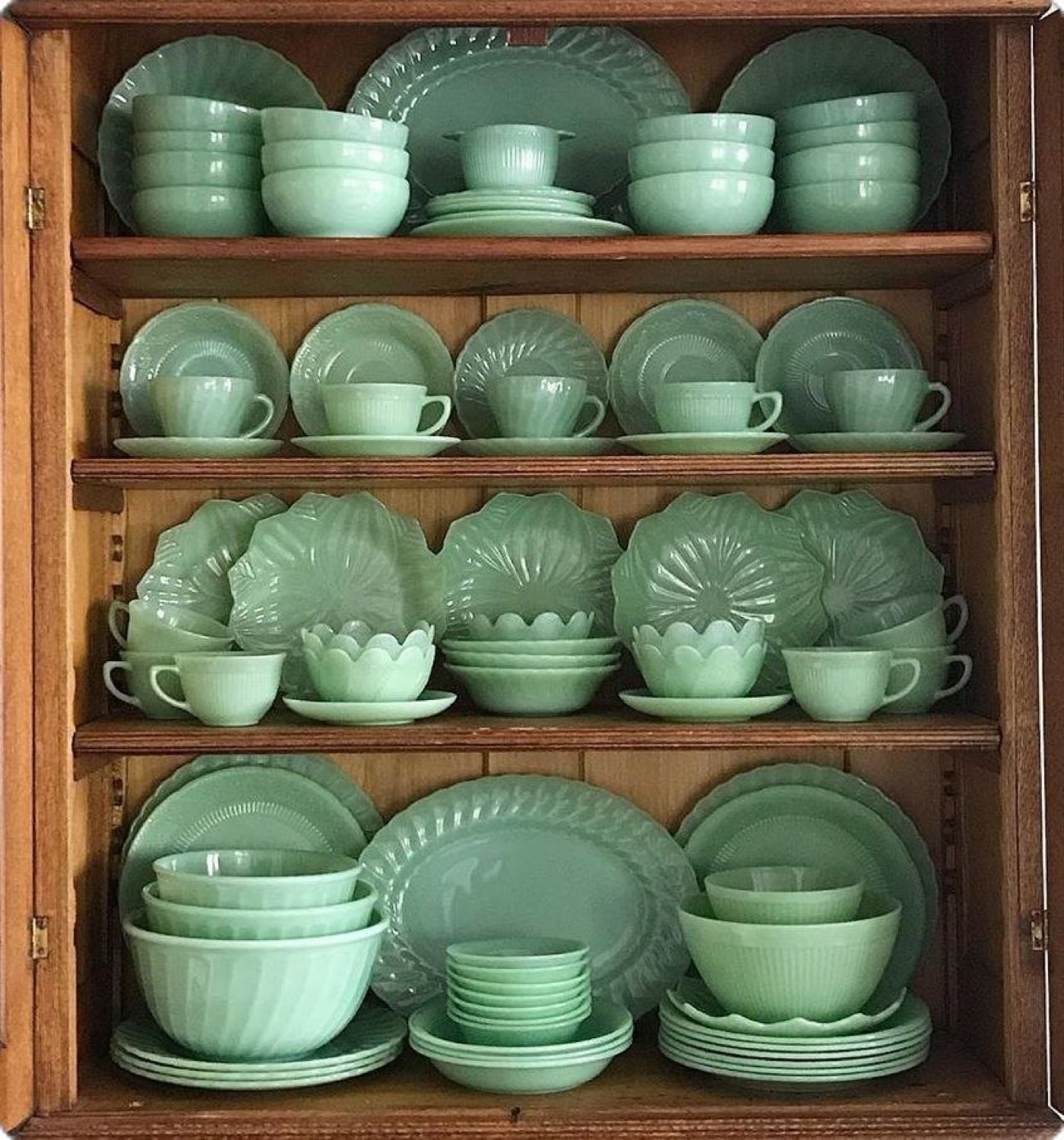
10. Jadeite Glass
Jadeite's spring-green color first caught on in the 1940s, and it still reads fresh on a shelf. Fire-King and McKee were the prominent producers back then, and those names matter when you're checking a mark.
What It's Worth
Good jadeite commands $500 or more from antique dealers and online resale listings. That's a serious markup on something you might find for a few dollars in a thrift store.
The soft green works with warm woods and brass without competing for attention, which makes it easy to fold into almost any kitchen or dining display.
Final Thoughts
The value in a thrift store is almost never on the surface. It's in the mark on the bottom of a vase, the pattern on a Pyrex bowl, or the weight of real crystal in your hand.
Learn two or three of these categories well, carry a short list of patterns and makers, and you'll start seeing past the clutter.
The next pair of brass candlesticks or jadeite bowl you walk past could be the piece that anchors a whole room.